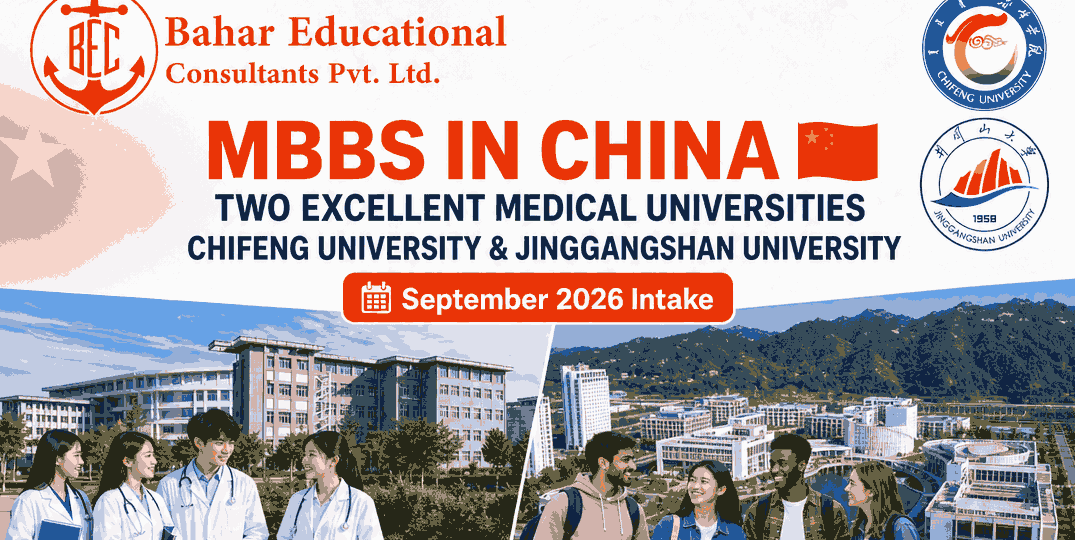
Introduction: Your Gateway to Global Medical Education TOP MEDICAL UNIVERSITIES FOR SEPTEMBER 2026 INTAKE
The dream of becoming a globally recognized doctor starts with choosing the right destination. Over the past decade, MBBS in China has emerged as the premier choice for thousands of international students. But why has this Asian giant become the global hub for medical education?
The global demand for qualified doctors is at an all-time high. Healthcare systems worldwide are expanding, creating an unprecedented need for skilled medical professionals. However, in many countries, medical education has become prohibitively expensive or fiercely competitive to the point where thousands of talented students are left without a seat. This is where studying medicine abroad becomes not just an option, but a life-changing opportunity.
China offers a unique blend of ancient medical traditions and cutting-edge modern technology. With massive investments in higher education, Chinese medical universities now boast state-of-the-art laboratories, globally recognized curricula, and affiliated teaching hospitals that handle millions of patient cases annually. For international students, this means unparalleled clinical exposure.
The September 2026 Intake represents an excellent opportunity for aspiring doctors. As the world moves past global disruptions, Chinese universities have fully reopened, offering a seamless on-campus experience. The September intake is the primary admission cycle, offering the widest selection of universities and seats. Applying early ensures you secure a place in top-tier institutions before they reach capacity. With BAHAR EDUCATIONAL CONSULTANTS Ltd. Pvt by your side, this journey is smooth, transparent, and guaranteed to set you on the path to medical excellence.
1. Chifeng University
Chifeng University
📍 Chifeng City, China
Chifeng University is a premier comprehensive university located in the culturally rich Chifeng City, Inner Mongolia. Known for its high educational standards and student-centric approach, it has become a highly sought-after destination for international students seeking a Clinical Medicine (MBBS) degree. The university combines rigorous academic training with extensive practical clinical exposure, ensuring graduates are ready to tackle global medical challenges.
Medical Classes From First Year
Unlike many programs that delay medical subjects, Chifeng University introduces foundational medical classes right from the first year, giving students an early start in their medical journey.
International Student-Friendly
The campus is designed to make international students feel at home, with dedicated support staff, multi-cuisine cafeterias, and cultural integration programs.
Affordable Tuition & Hostel
One of the most cost-effective MBBS programs in China, without compromising on educational quality or infrastructure. Low cost of living in Chifeng is a bonus.
Modern Medical Facilities
Equipped with advanced simulation labs, digital anatomy halls, and modern research centers, students learn using the latest medical technology.
Practical Clinical Training & Teaching Hospitals
Chifeng University prides itself on its strong network of affiliated teaching hospitals. These are high-bedded, Grade 3A hospitals where students undergo rigorous clinical rotations. This ensures that by the time students reach their internship year, they have witnessed and assisted in a vast array of medical cases, from general practice to complex surgeries.
Campus Life & Student Experience
Life at Chifeng University is vibrant and engaging. Students have access to sports complexes, libraries, and numerous student clubs. The city of Chifeng offers a safe, peaceful environment with beautiful landscapes, making it an ideal place to focus on studies while enjoying a rich cultural experience.
Why Choose Chifeng University?
- Direct entry into medical subjects from year one.
- Highly affordable fee structure with excellent ROI.
- Safe and welcoming environment for international students.
- Strong emphasis on hands-on clinical practice.
- Comprehensive support system for foreign nationals.
2. Jinggangshan University
Jinggangshan University
📍 Ji’an, Jiangxi Province, China
Located in the historically significant city of Ji’an in Jiangxi Province, Jinggangshan University is a distinguished institution known for its academic rigor and research contributions. The English Medium Program for Clinical Medicine is specifically tailored for international students, adhering to global medical education standards.
English Medium Program
The entire MBBS curriculum is taught in English by highly qualified professors, ensuring language is never a barrier to learning.
Modern Medical Laboratories
The university houses cutting-edge labs for biochemistry, anatomy, pathology, and pharmacology, allowing students to gain deep practical insights.
Clinical Hospital Training
Students gain early exposure to hospital environments, with attached top-tier hospitals providing extensive patient diversity for clinical learning.
Research Opportunities
The university encourages students to participate in medical research, fostering critical thinking and innovation in healthcare solutions.
International Student Environment & Affordability
Jinggangshan University hosts a diverse community of international students. The cost of living in Ji’an is notably lower than in China’s coastal megacities, making it highly affordable for students. The university offers comfortable, secure hostels with all necessary amenities.
Recognition & Teaching Quality
The university is listed in the World Directory of Medical Schools (WDOMS), ensuring its degrees are recognized globally by bodies like WHO, PMDC, and USMLE. The teaching quality is maintained through continuous faculty development and modern pedagogical methods.
Career Prospects & Advantages
- Globally recognized degree enabling practice in multiple countries.
- Strong foundation for passing international licensing exams (USMLE, PLAB, PMDC).
- Excellent student-to-teacher ratio for personalized attention.
- Beautiful, historic campus promoting a focused study environment.
Why Study MBBS in China?
Choosing to study MBBS in China is a decision backed by solid global trends. China has rapidly transformed into a global education superpower. Here is a detailed look at why China is the ultimate destination for medical education:
1. Affordable Tuition & Cost of Living
Compared to the US, UK, Australia, or even private medical colleges in South Asia, affordable MBBS in China is a reality. Tuition fees are highly reasonable, and the cost of living is manageable, allowing students to graduate without crippling debt.
2. English Medium Programs
Top medical universities in China offer entire MBBS programs in English. This eliminates the need to learn a new language from scratch to study, though basic Chinese is taught to help students interact with patients during clinical rotations.
3. Modern Hospitals & Clinical Exposure
China’s healthcare infrastructure is phenomenal. Affiliated teaching hospitals are massive, treating thousands of patients daily. This provides international students with clinical exposure to diseases and cases they might never see in their home countries.
4. Advanced Research Facilities
Chinese universities invest heavily in medical research. Students have access to advanced laboratories and the opportunity to learn about the latest breakthroughs in medical science, from genomics to robotic surgery.
5. International Recognition
Medical universities in China are recognized by the World Health Organization (WHO), FAIMER, and medical councils worldwide, including PMDC, MCI (NMC), GMC, and more. This global recognition allows graduates to practice medicine internationally.
6. Safe Environment & Student Diversity
China is one of the safest countries in the world. Campuses are secure, and the society is highly disciplined. Students from all over the globe study here, creating a diverse, multicultural environment that fosters global friendships.
7. Medical Technology & Innovation
China is at the forefront of medical technology. Students learn using the latest diagnostic tools, telemedicine platforms, and AI-assisted medical devices, giving them a technological edge in their future careers.
8. Scholarships & Student Support
Many universities offer scholarships based on academic performance. Additionally, the support system for international students is robust, with dedicated international student offices handling everything from accommodation to visa issues.
MBBS Curriculum in China
The Medical Education in China follows a stringent 6-year curriculum (5 years of academic study + 1 year of internship). The curriculum is designed to build knowledge progressively, from basic sciences to advanced clinical practice.
First Year: Basic Medical Sciences & Foundation
Students focus on foundational subjects including Anatomy, Histology, Embryology, and Medical English. An introduction to Chinese language and culture is also provided.
Second Year: Core Medical Sciences
The curriculum advances to Physiology, Biochemistry, Microbiology, Pathology, and Pharmacology. Students begin to understand how the human body functions in health and disease.
Third Year: Bridge to Clinical Medicine
Subjects include Pathology, Diagnostics, Preventive Medicine, and Traditional Chinese Medicine (TCM). Students start learning how to diagnose illnesses and interpret lab results.
Fourth Year: Clinical Subjects & Rotations
Students dive deep into Internal Medicine, Surgery, Obstetrics & Gynecology, and Pediatrics. Classroom learning is paired with hospital visits and observational clinical rotations.
Fifth Year: Advanced Clinical Training
Focused clinical rotations in affiliated hospitals. Students interact with patients, take medical histories, and assist in procedures under the supervision of senior doctors. Elective subjects like Psychiatry and Dermatology are also covered.
Sixth Year: Internship
A mandatory one-year rotating internship. Students can choose to do this in China or in their home country (subject to university and local medical council approval). This year solidifies their practical skills, making them ready for independent practice.
Eligibility for China MBBS Admission 2026
To secure admission for the MBBS September Intake 2026, students must meet specific criteria set by the Chinese Ministry of Education and the respective universities.
Academic Requirements
- Minimum 60% marks in Higher Secondary School Certificate (HSSC) / A-Levels / 12th Grade.
- Physics, Chemistry, and Biology (PCB) must be core subjects.
- Some universities may require a higher percentage for competitive programs.
Age & Health Requirements
- Applicants must be between 17 and 25 years of age by September 2026.
- Students must be in good physical and mental health to undergo rigorous medical training.
Required Documents
- Valid Passport (minimum 1-year validity).
- Passport-sized photographs.
- High School Transcripts and Graduation Certificate.
- Physical Examination Form (Medical Form).
- Police Clearance Certificate (Non-Criminal Record).
Financial & Language Requirements
- Bank Statement showing sufficient funds to cover tuition and living expenses.
- Proof of English Proficiency (IELTS/TOEFL) if available, though not strictly mandatory for all universities.
Admission Process for September 2026 Intake
Applying through BAHAR EDUCATIONAL CONSULTANTS Ltd. Pvt ensures a hassle-free admission process. Here is the step-by-step guide to securing your seat:
- Inquiry & Counseling: Contact us via our website or WhatsApp. Our expert counselors will assess your academic profile and guide you on university selection.
- Document Submission: Submit your scanned transcripts, passport, and other required documents to our team for verification.
- University Application: We submit your application to the selected university (e.g., Chifeng or Jinggangshan University) before the deadline.
- Admission Letter: Upon university approval, you will receive an official Admission Letter, usually within 2-4 weeks.
- JW202 Form: The university applies for the JW202 Form (Visa Application for Study in China) from the Chinese Ministry of Education on your behalf.
- Visa Processing: Once you receive the Admission Letter and JW202 Form, we assist you in applying for the X1 Student Visa at the Chinese Embassy in your country.
- Departure & Travel: We guide you on booking flights, packing essentials, and preparing for your journey to China.
- Arrival & Registration: Our representatives in China will coordinate airport pickup. We assist you with university registration, medical check-ups, and residence permit applications.
Student Life in China
Studying in China is not just about academics; it’s a holistic cultural and life experience. International students enjoy a high standard of living, safety, and numerous opportunities for personal growth.
Accommodation & Hostels
Universities provide on-campus hostels specifically for international students. Rooms are typically double or single occupancy, furnished with beds, study tables, wardrobes, and often equipped with air conditioning, heaters, and Wi-Fi. Hostels have common kitchens, laundry rooms, and 24/7 security.
Food & Dining
While Chinese cuisine is famous worldwide, university cafeterias cater to international tastes. Halal food, South Asian cuisines, and Western options are readily available. Students can also cook their own meals in shared kitchens.
Transportation
China boasts one of the best public transportation systems in the world. High-speed trains, extensive subway networks, and affordable buses make traveling within the city and across the country incredibly convenient.
Safety & Healthcare
China is exceptionally safe. Strict gun laws and comprehensive campus security mean students can study and travel without fear. Universities have on-campus clinics, and students are required to have medical insurance covering hospital treatments.
Weather & Culture
China experiences four distinct seasons. From the snowy winters in the north to the tropical climate in the south, students can experience diverse weather. Culturally, China offers a rich tapestry of history, festivals (like the Spring Festival), and modern entertainment.
MBBS Career Opportunities After Graduation
An International MBBS Program in China opens doors to global medical careers. Graduates are well-equipped to pursue various paths:
Medical Practice in Home Country
Graduates can return to their home country, clear the national medical licensing exam (e.g., PMDC in Pakistan, NMC in India), and start practicing as registered doctors.
USMLE (United States)
Students aiming to practice in the USA can take the USMLE. Chinese medical schools provide the foundational knowledge required to clear Step 1 and Step 2 CK.
PLAB (United Kingdom)
Graduates can appear for the PLAB exam to register with the General Medical Council (GMC) and practice in the UK.
Higher Studies & Specialization
Many graduates opt for Master’s degrees or specialized residency programs in China, Europe, or the USA, focusing on fields like Cardiology, Surgery, or Pediatrics.
Comparison: Chifeng University vs. Jinggangshan University
Both universities offer excellent opportunities for MBBS for International Students. Here is a detailed comparison to help you choose the right fit:
| Feature | Chifeng University | Jinggangshan University |
|---|---|---|
| Location | Chifeng City, Inner Mongolia | Ji’an, Jiangxi Province |
| Program | Clinical Medicine (MBBS) | Clinical Medicine (MBBS) |
| Medium of Instruction | English | English |
| Teaching Style | Early medical subject introduction, practical focus | Research-oriented, modern pedagogical methods |
| Clinical Training | Grade 3A affiliated hospitals, high patient inflow | Top-tier affiliated hospitals, diverse patient base |
| Campus & Environment | Peaceful, international friendly, modern facilities | Historic, diverse, advanced laboratories |
| Affordability | Highly affordable tuition and living costs | Affordable with lower regional living costs |
| Recognition | WHO, WDOMS, PMDC recognized | WHO, WDOMS, PMDC recognized |
| Career Opportunities | Strong clinical foundation for global practice | Excellent base for research and clinical practice |
Why Apply Through BAHAR EDUCATIONAL CONSULTANTS Ltd. Pvt?
Navigating international admissions can be complex. BAHAR EDUCATIONAL CONSULTANTS Ltd. Pvt is your trusted partner, ensuring a seamless transition from your home country to a top medical university in China. With offices in Pakistan and China, we provide end-to-end support.
Expert University Selection
We analyze your academic record, budget, and preferences to recommend the best university for your career goals.
Application & Document Verification
Our team meticulously verifies your documents and handles the entire application process, minimizing the risk of rejection.
Admission & Visa Assistance
We secure your Admission Letter, JW202 Form, and guide you step-by-step through the X1 Student Visa application process.
Pre-Departure Briefing
We prepare you for life in China, covering cultural differences, weather, packing lists, and university rules.
Airport Pickup Coordination
Our China office representatives ensure you are picked up safely from the airport and transported to your university campus.
After Arrival Support
From opening bank accounts to registering for classes and applying for a residence permit, we stay by your side even after you arrive.
Frequently Asked Questions (FAQs)
Yes, degrees from recognized Chinese medical universities are listed in the World Directory of Medical Schools (WDOMS) and recognized by WHO, PMDC, NMC, and other global medical councils.
The entire MBBS curriculum is taught in English. However, students are also taught basic Chinese Mandarin to communicate with local patients during clinical rotations.
Applications usually open in January 2026. It is highly recommended to apply early (March-June) as seats fill up quickly and visa processing takes time.
The MBBS program typically lasts 6 years, comprising 5 years of academic classroom and clinical study, followed by a 1-year mandatory internship.
Yes, most universities allow students to return to their home country for the internship year, provided the hospital is recognized by the local medical council and approved by the university.
NEET is required for Indian students. For Pakistani students, an equivalence and passing grade in MDCAT or local board exams is generally sufficient, though specific requirements can vary.
The cost varies by university but generally ranges from $3,000 to $5,000 per year for tuition. Living expenses are approximately $1,500 to $2,000 per year, making it highly affordable.
Yes, many universities offer partial scholarships based on academic merit. The Chinese Government Scholarship (CSC) is also available for outstanding international students.
China is considered one of the safest countries in the world. Campuses have strict security protocols, and the overall crime rate is very low.
University cafeterias offer a variety of cuisines, including Halal food, South Asian dishes, and Western options. Students can also cook their own meals in shared hostel kitchens.
Students must have a minimum of 60% in their 12th grade (High School) with Physics, Chemistry, and Biology. They must also be between 17 and 25 years old.
No, you do not need prior knowledge of Chinese. Universities offer Chinese language classes as part of the curriculum during your studies.
The JW202 Form is an official document issued by the Chinese Ministry of Education. It is required to apply for a student visa (X1 Visa) at the Chinese Embassy.
Part-time work is generally restricted for international students on a student visa. However, students can participate in university assistantships or research projects.
We provide complete visa guidance, including document checklists, form filling assistance, and mock interviews to ensure your visa application is successful.
Universities usually allow students to retake exams. If a student fails, they must clear the supplementary exams before progressing to the next year.
Hostels are strictly separate for male and female students to ensure privacy and cultural respect.
Yes, students can travel back home during winter and summer vacations. The university issues a letter to facilitate multiple-entry visas if needed.
Yes, comprehensive health insurance is mandatory for all international students in China. The cost is usually included in the university fees.
China has diverse weather. Northern regions (like Inner Mongolia) have cold winters and mild summers, while southern regions (like Jiangxi) are more tropical and humid.
Fees can usually be paid via bank transfer or directly at the university finance office upon arrival. We guide students on the safest payment methods.
Absolutely. Our China office staff will assist you with campus registration, opening a bank account, getting a local SIM card, and applying for your residence permit.
Yes, after graduating from a PMDC-recognized university, you must pass the PMDC licensing exam (NEB) to legally practice medicine in Pakistan.
You need your passport, original Admission Letter, original JW202 Form, educational transcripts, physical examination form, and passport-sized photos.
Simply click the “Apply Now” or “WhatsApp Us” button on this page, or email us at baharedu50@gmail.com. Our team will get back to you within 24 hours.
Secure Your Seat for September 2026 Today!
Time is running out! Seats at top medical universities like Chifeng and Jinggangshan fill up rapidly. Don’t let this golden opportunity pass you by. Secure your future in medicine with the experts.
Contact BAHAR EDUCATIONAL CONSULTANTS Ltd. Pvt
Ready to take the first step? Reach out to our expert team today for free counseling and admission guidance.
📍 Pakistan Office
+92 322 1100612
📍 China Office
+86 156 294 50793